Top 8 Healthy Habits
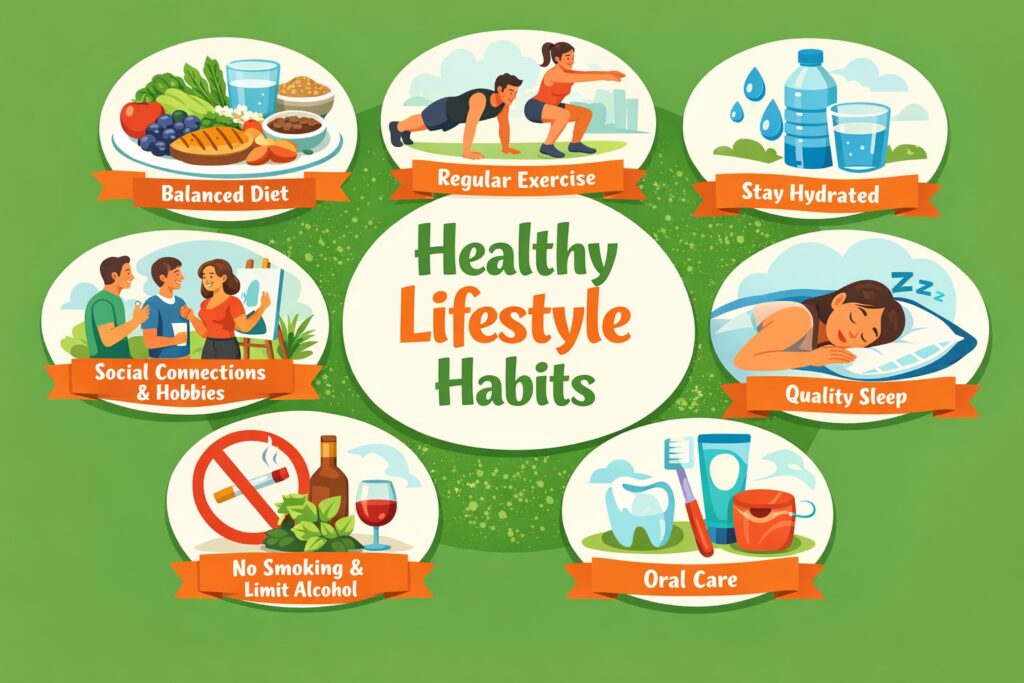
1.Balanced Diet
Why a Balanced Diet Matters A balanced diet is the foundation of good health. It gives your body the fuel it needs to function, repair, and thrive. When you eat a variety of foods—fruits, vegetables, whole grains, lean proteins, and healthy fats—you’re giving your body the nutrients it needs to:
- Boost energy levels
- Strengthen your immune system
- Support brain function and mood
- Maintain a healthy weight
- Prevent chronic diseases like diabetes, heart disease, and high blood pressure
Simple Advice for Daily Eating Healthy Habits
- Eat the rainbow: Include colorful fruits and vegetables in every meal.
- Choose whole grains: Brown rice, oats, and whole wheat bread are better than refined options.
- Include lean protein: Beans, fish, eggs, and chicken help build and repair tissues.
- Don’t fear healthy fats: Avocados, nuts, and olive oil support heart and brain health.
- Stay hydrated: Water is essential for digestion.
2.Physical Exercises
Eating well is only half the equation for daily health habits—the other half is staying active. Regular physical exercise keeps your body strong, your mind sharp, and your energy levels high. Here are some simple yet powerful exercises you can incorporate into your routine:
- Morning Exercise: Light stretching or yoga helps wake up your muscles, improve flexibility, and set a positive tone for the day.
- Push-Ups: Strengthen your chest, shoulders, and arms while also engaging your core.
- Sit-Ups: Build abdominal strength and improve posture.
- Squats: Work your legs, glutes, and core, supporting mobility and balance.
- Planks: Enhance core stability and endurance.
- Jumping Jacks: A quick cardio boost that improves circulation and warms up the body.
- Lunges: Strengthen legs and improve balance.
- Walking or Jogging: Boost cardiovascular health and mental clarity.
- Stretching: Prevents stiffness, reduces injury risk, and promotes relaxation.
💡 Why These Exercises Are Important to your body.
- Boost Energy: Physical activity increases blood flow and oxygen supply, helping you feel more awake and focused.
- Support Weight Management: Burns calories and builds lean muscle mass.
- Strengthen Muscles & Bones: Reduces the risk of osteoporosis and supports long-term mobility.
- Improve Mental Health: Releases endorphins that reduce stress and improve mood.
- Enhance Daily Functionality: Builds strength and flexibility for everyday tasks, from lifting groceries to climbing stairs.
🏋️ Weekly Exercise Plan for Daily Health Habits
Goal: Build strength, improve flexibility, boost energy, and support overall wellness.
📅 Day 1 – Full Body Strength
- Push-Ups: 3 sets of 12
- Squats: 3 sets of 15
- Plank: 3 × 30 seconds
- Lunges: 3 sets of 12 (each leg)
📅 Day 2 – Cardio & Core
- Jogging/Brisk Walk: 20–30 minutes
- Sit-Ups: 3 sets of 15
- Jumping Jacks: 3 × 1 minute
- Mountain Climbers: 3 × 30 seconds
📅 Day 3 – Flexibility & Recovery
- Morning Stretch Routine: 10 minutes
- Yoga Flow: 20 minutes
- Deep Breathing/Mindfulness: 5 minutes
📅 Day 4 – Upper Body Focus
- Push-Ups: 4 sets of 10
- Shoulder Press (with dumbbells or water bottles): 3 sets of 12
- Bicep Curls: 3 sets of 12
- Plank with Shoulder Taps: 3 × 20 taps
📅 Day 5 – Lower Body Focus
- Squats: 4 sets of 15
- Lunges: 3 sets of 12 (each leg)
- Glute Bridges: 3 sets of 15
- Calf Raises: 3 sets of 20
📅 Day 6 – Cardio Blast
- Jump Rope: 3 × 1 minute
- Jogging/Running: 20 minutes
- Burpees: 3 sets of 10
- High Knees: 3 × 30 seconds
📅 Day 7 – Active Rest
- Light walk outdoors: 20 minutes
- Gentle stretching: 10 minutes
- Meditation or breathing exercises: 5–10 minutes
3. Drinking Enough Clean Water
Water is the simplest yet most powerful daily health habit. Clean, safe water keeps your body functioning at its best and supports every other wellness practice you build. Without proper hydration, even the healthiest diet and exercise routine can fall short.
🌿 Why Drinking Water Is Essential
- Hydration & Energy: Prevents fatigue and keeps you alert throughout the day.
- Digestion & Nutrient Absorption: Helps break down food and transport nutrients to cells.
- Temperature Regulation: Maintains body temperature and prevents overheating.
- Joint & Tissue Health: Lubricates joints and cushions organs.
- Waste Removal: Flushes toxins through urine, sweat, and bowel movements.
- Mental Clarity & Mood: Prevents headaches, mood swings, and poor concentration caused by dehydration
📊 Acceptable Daily Standards
Health experts recommend the following daily water intake (including fluids from beverages and water-rich foods):
| Group | Recommendable Intake |
| Adult men | 3.7 liters (≈ 15 cups) |
| Adult women | 2.7 liters (≈ 11 cups) |
| Children (4–13 years) | 1.5–2 liters (≈ 6–8 cups) |
| Teenagers (14–18 yrs.) | 2–3 liters (≈ 8–12 cups) |
| Pregnant women | 3 liters (≈ 12 cups) |
| Breastfeeding women | 3.1 liters (≈ 13 cups) |
4. Enough Sleep.
Sleep is one of the most overlooked yet vital daily health habits. Just like food and water, rest is essential for your body and mind to function at their best. Without enough sleep, even a balanced diet and regular exercise cannot fully support your wellness.
🌙 Why Sleep Matters
- Restores Energy: Sleep allows your body to recharge and repair muscles, tissues, and cells.
- Supports Brain Function: Improves memory, focus, and decision-making.
- Boosts Immunity: Helps your body fight infections and reduces inflammation.
- Balances Hormones: Regulates appetite, stress, and mood.
- Promotes Longevity: Consistent sleep reduces the risk of chronic diseases.
🛌 Recommended Sleep Duration
- Adults: 7–9 hours per night
- Teenagers: 8–10 hours
- Children: 9–12 hours
- Infants: 12–16 hours
🌞 Afternoon Short Naps
Short naps can be a powerful addition to your daily routine when used wisely:
- Ideal Duration: 15–30 minutes (longer naps may cause grogginess).
- Best Time: Early afternoon (between 1–3 PM) to avoid interfering with nighttime sleep.
- Benefits: Boosts alertness, improves mood, enhances learning, and reduces stress.
💡 Importance of Sleep in Daily Habits
- Enhances productivity and creativity.
- Improves physical performance and recovery after exercise.
- Reduces risk of accidents caused by fatigue.
- Supports emotional stability and resilience.
Takeaway: Getting enough sleep is not a luxury—it’s a necessity. Combine consistent nighttime rest with occasional short naps to keep your body energized, your mind sharp, and your wellness habits sustainable.
5. Brushing Teeth After Meals
Maintaining good oral health is a cornerstone of overall wellness and should be part of your daily routine. Brushing your teeth after meals helps remove food particles and plaque that can lead to cavities, gum disease, and bad breath. When combined with proper flossing, this habit ensures that areas between the teeth—where a toothbrush cannot reach—are kept clean and free from harmful bacteria. Flossing once a day reduces the risk of gum inflammation and supports long‑term dental health.
Taking care of your teeth is not just about a bright smile; it directly impacts your ability to eat comfortably, speak clearly, and avoid costly dental treatments in the future. Oral hygiene also plays a role in preventing systemic health issues, as poor dental health has been linked to conditions like heart disease. By brushing after meals and flossing properly, you reinforce Healthy habits that protect both your mouth and your overall well‑being.
6. Limit Alcohol Consumption and Avoid smoking
To maintain long‑term wellness, it’s important to avoid habits that can cause serious harm to your health. Smoking introduces toxic chemicals into the body that damage the lungs, weaken the immune system, and increase the risk of cancer and heart disease. Similarly, excessive alcohol consumption can harm the liver, disrupt sleep, weaken judgment, and raise the risk of chronic illnesses such as hypertension and diabetes.
By steering clear of smoking and limiting alcohol intake, you protect your body from preventable damage and support stronger daily performance in both physical and mental activities. These choices also improve energy levels, enhance focus, and reduce the likelihood of lifestyle‑related diseases. Building Healthy habits means not only adding positive routines like exercise and balanced nutrition but also eliminating harmful behaviors that undermine your progress.
7. Socialising
Socialising is more than just spending time with others—it’s a vital component of overall health. Building strong social connections reduces stress, boosts happiness, and provides emotional support during challenging times. People who regularly interact with friends, family, or community groups often enjoy better mental health, stronger immunity, and even longer lifespans.
Equally important are hobbies, which allow individuals to relax, express creativity, and recharge their minds. Whether it’s painting, gardening, cooking, or playing sports, hobbies encourage personal growth and help balance the demands of daily life. They also provide opportunities to meet new people, share experiences, and strengthen social bonds. Together, socialising and hobbies create a healthy lifestyle that nurtures both body and mind, reinforcing Healthy habits that last a lifetime.
🎨 Hobby Ideas for Different Lifestyles
- Indoor hobbies: Reading, painting, cooking, knitting, journaling
- Outdoor hobbies: Gardening, hiking, cycling, photography
- Creative hobbies: Writing, music, DIY crafts, digital art
- Fitness‑focused hobbies: Dancing, yoga, swimming, martial arts
- Community hobbies: Volunteering, book clubs, team sports, cultural events

Takeaway: Socialising and hobbies are not just leisure activities—they are essential for emotional resilience, creativity, and long‑term wellness.
8. Medical Check‑Ups
Regular medical check‑ups are an essential part of maintaining overall wellness. They allow healthcare professionals to detect potential health issues early, monitor existing conditions, and provide guidance on preventive care. By scheduling routine visits, you gain valuable insights into your blood pressure, cholesterol levels, blood sugar, and other vital indicators that can help prevent chronic diseases such as diabetes, heart disease, and hypertension.
🌿 Why Medical Check‑Ups Are Important
- Early Detection: Identifies health problems before they become serious.
- Preventive Care: Offers vaccinations, screenings, and lifestyle advice to reduce risks.
- Monitoring Progress: Tracks improvements in diet, exercise, and other Healthy habits.
- Peace of Mind: Provides reassurance and confidence in your health status.
📅 How Often Should They Be Done?
- Adults (18–40 years): Every 1–2 years for general check‑ups.
- Adults (40+ years): Annually, as risks for chronic conditions increase.
- Children & Teenagers: Regular pediatric visits as recommended by healthcare providers.
- Special Cases: More frequent check‑ups if managing chronic illnesses or specific risk factors.
Medical check‑ups are not just about treating illness—they are about preventing it. By making regular visits part of your routine, you strengthen your commitment to Healthy habits and ensure long‑term vitality.
Follow us