
The Four Rules Every Global Buyer Must Master
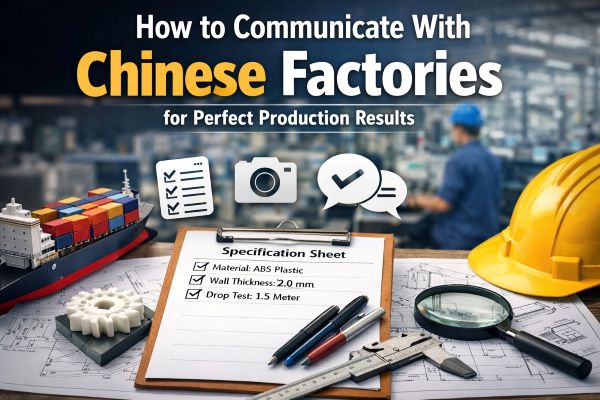
Global sourcing has become one of the most powerful tools for modern businesses. China remains the world’s manufacturing center, offering scale, efficiency, and cost advantages unmatched anywhere else. Yet, despite its importance, many buyers continue to struggle with inconsistent quality, missed deadlines, rising costs, and frustrating misunderstandings.
The root cause of most of these problems is not pricing, machinery, or even labor.
It is communication.
Manufacturing in China operates under a communication system that is fundamentally different from Western business culture. Buyers who fail to understand this system often repeat the same mistakes, while those who adapt quickly unlock smoother production, stronger partnerships, and significantly better outcomes.
This article explains the four core rules of communication that every buyer must master to succeed when working with Chinese factories.
Understanding the Communication Gap
Western communication emphasizes:
- Expression
- Interpretation
- Context
- Intention
Chinese factory communication emphasizes:
- Precision
- Structure
- Written instruction
- Process execution
When these two systems collide without adjustment, confusion follows. Instructions that feel clear to a Western buyer may appear incomplete to a Chinese production team. What the buyer believes is “understood” may never have been formally defined on the factory floor.
Mastering this difference is the foundation of successful global manufacturing.
Rule One: Use Short Sentences and Remove All Assumptions
One of the most common mistakes buyers make is using descriptive but non-technical language.
Phrases such as:
- “We need this to be durable”
- “Make it premium quality”
- “It should feel solid”
carry meaning in conversation but no actionable instruction in manufacturing.
Factories do not guess. They execute exactly what is written. When instructions are vague, results become vague.
How to Communicate Correctly
Replace emotional or descriptive language with measurable technical specifications:
- Material: ABS plastic
- Wall thickness: 2.0 mm
- Impact resistance: 1.5 m drop test
- Surface finish: Matte, scratch-resistant
- Tolerance: ±0.2 mm
Short sentences. Clear data. No assumptions.
This eliminates misinterpretation, stabilizes quality, and prevents costly revisions.
Rule Two: Pictures Are More Powerful Than Words
Language always allows room for interpretation. Visuals do not.
In manufacturing, visual communication is the strongest form of instruction. A single reference image can prevent weeks of confusion.
Best Practice for Visual Communication
Every product briefing should include:
- Reference photos
- Technical drawings
- Marked-up sketches
- Physical samples when possible
Words like “glossy,” “soft touch,” or “luxury” vary by culture and experience. A picture defines reality instantly and universally.
Professional buyers never rely on text alone. They build visual clarity before production begins.
Rule Three: Confirm Everything in Writing
One of the most dangerous misunderstandings in global manufacturing is the assumption that verbal agreement equals acceptance.
In many cases, acknowledgment simply means:
“I have received your message.”
It does not mean:
“I agree with every requirement.”
The Golden Rule of Manufacturing
If it is not written, it does not exist.
Every production order must include a written specification document covering:
- Materials
- Dimensions and tolerances
- Colors and finishes
- Packaging requirements
- Quality control checkpoints
- Testing standards
- Production timeline
- Delivery terms
- Payment schedule
This document becomes the foundation for accountability, quality enforcement, and dispute resolution.
Without it, responsibility becomes impossible to prove.
Rule Four: Respect the Factory’s Workflow
Factories operate on fixed production cycles:
- Raw material procurement
- Tooling and mold preparation
- Production scheduling
- Assembly
- Quality control
- Packaging
- Shipment
Changing requirements mid-process disrupts every stage. Tooling may need redesign, materials may be wasted, schedules collapse, and costs increase. Trust also suffers.
Why Predictability Matters
Factories prioritize buyers who are:
- Organized
- Stable
- Consistent
- Prepared
Predictable buyers receive faster responses, stronger cooperation, and priority scheduling.
Manufacturing rewards planning, not pressure.
Why Western Communication Often Fails in Manufacturing
Western business culture values flexibility and negotiation. Chinese manufacturing values clarity and execution. Neither system is wrong — but applying the wrong system in the wrong environment leads to failure.
When buyers adapt their communication to the factory’s operational reality, production becomes:
- Faster
- Cheaper
- More reliable
- Less stressful
The Strategic Advantage of Clear Communication
Most importers focus on price. Experienced professionals focus on process.
Clear communication:
- Protects profit margins
- Stabilizes supply chains
- Reduces defects and delays
- Builds long-term manufacturing partnerships
It is the hidden competitive advantage behind the world’s most successful global brands.
Conclusion
Successful production in China is not about speaking louder or negotiating harder. It is about communicating in a system that factories understand and respect.
Short instructions. No assumptions. Strong visuals. Everything in writing. Respect the workflow.
Master these principles and manufacturing transforms from a risk into a strategic asset.
good
thanks for your comment.let us know what we can address next